

The Leopard and the Lion
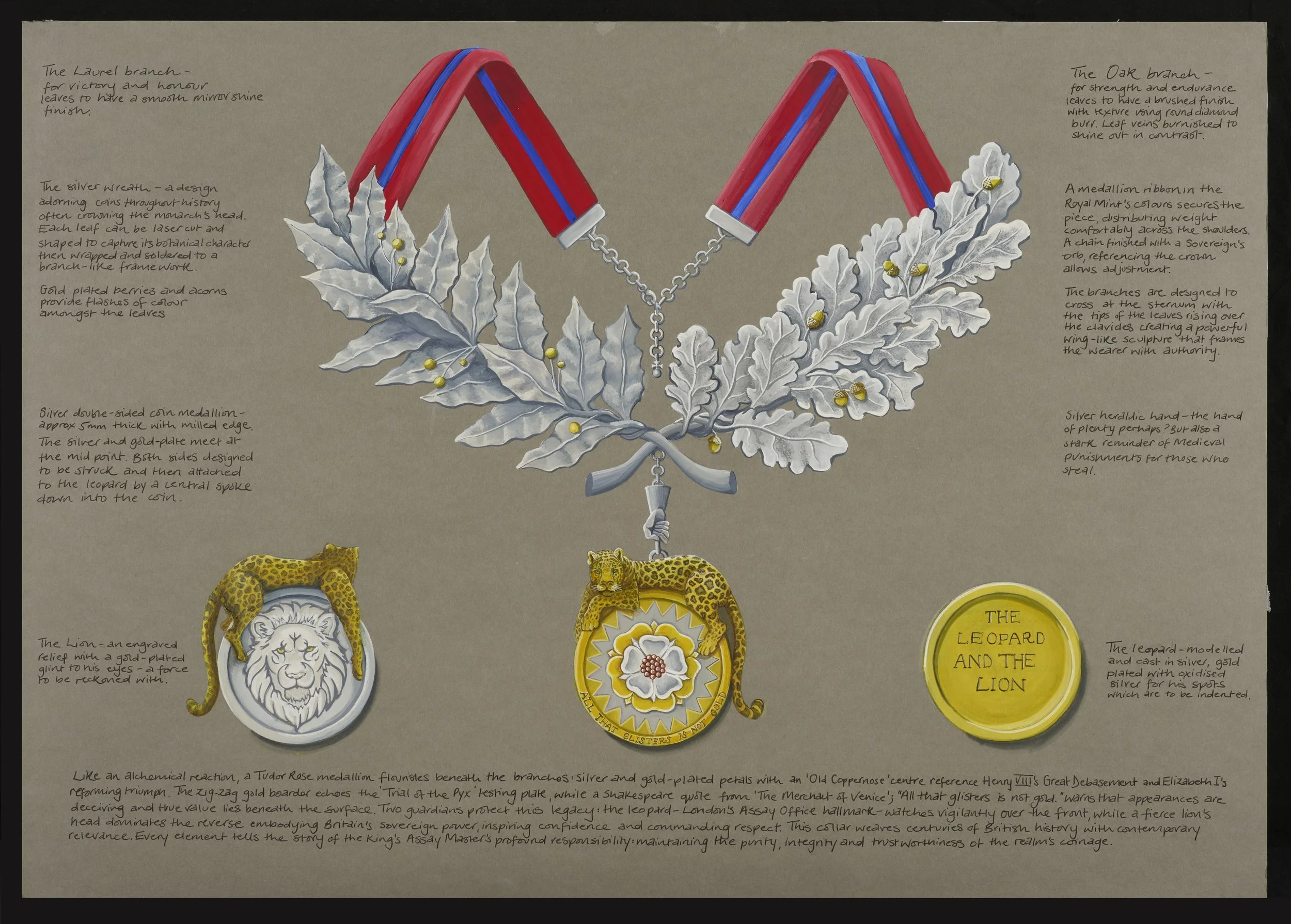
Katherine Elder’s hand-painted, award winning regalia design at the GCDC awards 2026
I still can't quite believe I'm writing this.
"The Leopard and the Lion" my hand-painted design for a ceremonial collar for the Master of the Assay won Bronze at the Goldsmiths' Craft and Design Council Awards 2026.
The Master of the Assay is one of the oldest roles in British craft. The person who stands responsible for the integrity and purity of British coinage and precious materials. The keeper of standards that have governed gold and silver since medieval times. When I was asked to design ceremonial regalia for this office, I knew immediately it wasn't just a jewellery commission. It would require a deep dive into British history. Every element had to carry weight. Every symbol had to earn its place. And I fell down the research rabbit hole completely.
This is what I made, and why.
The Wreath: A Crown of British Heritage
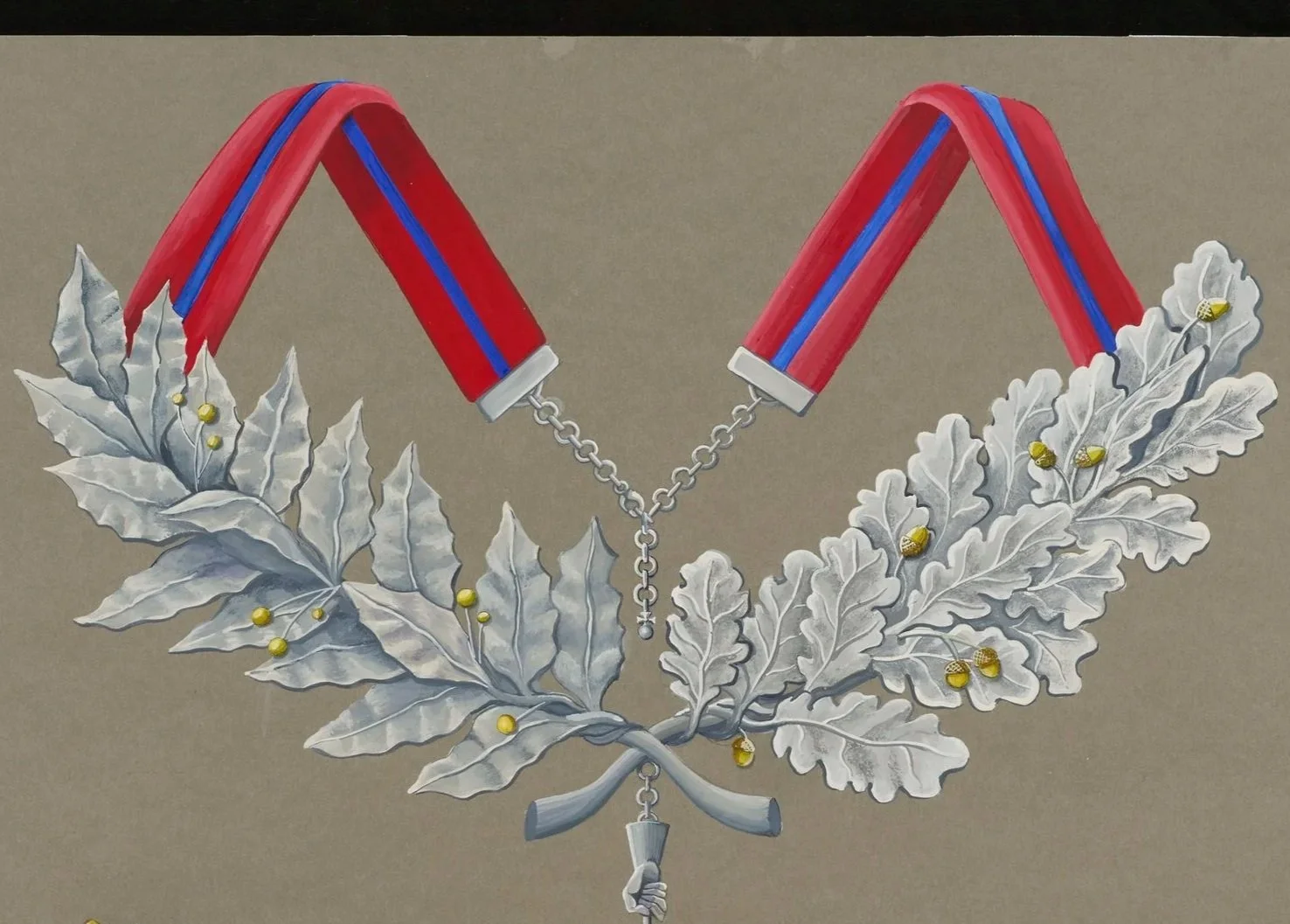
Katherine Elder’s hand painted award winning regalia design for the Royal Mint. Detail: the laurel and oak leaf wreath, individually crafted in silver with gold-plated berries and acorns.
The collar takes the form of a wreath, one of the most ancient symbols in Western civilisation. Two types of tree leaves, carefully chosen for what they represent:
The Laurel - the Roman symbol of victory, triumph, and honour.
The Oak - England's national tree standing for strength, endurance and wisdom.
Together, they create the perfect symbol to celebrate England's Assay Master combining classical foundation and national identity.
Each leaf is individually crafted in silver, shaped and curved to capture its botanical character. Gold-plated laurel berries and acorns provide flashes of precious metal throughout suggesting the fruit that comes from vigilance and nuture.
The collar is designed to sit with the branches crossing at the sternum, leaves rising over the clavicles. A powerful, wing-like sculpture that frames the wearer with authority and grace.
The Medallion: An Alchemical Reaction
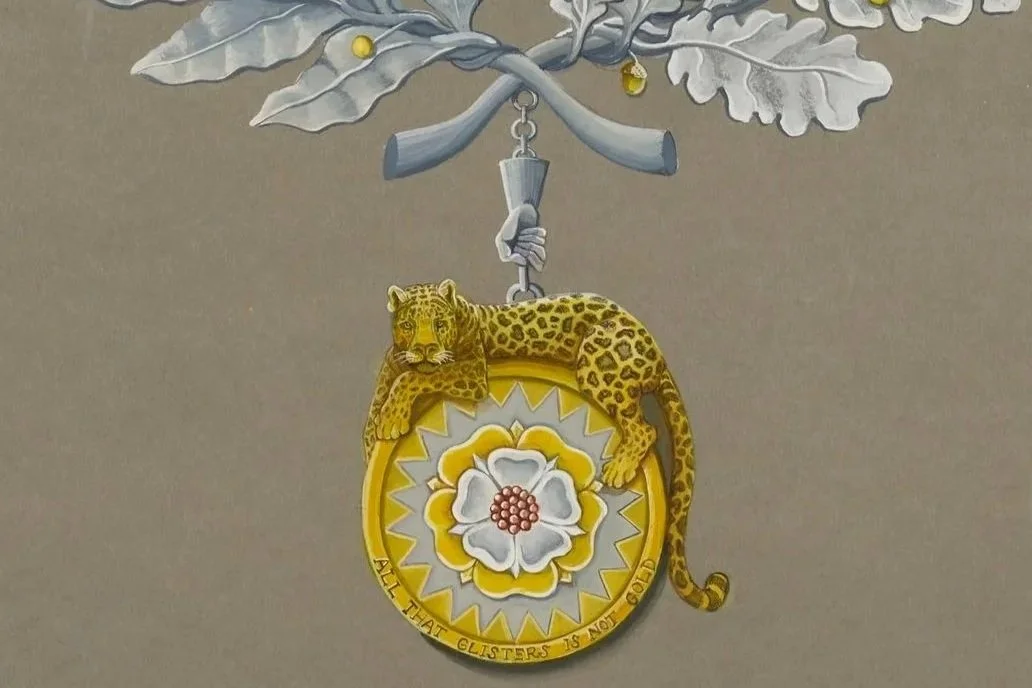
Katherine Elder’s hand painted, GCDC award winning regalia design for the Royal Mint. Detail: the Tudor Rose medallion with its gold, silver and copper centre and London Assay office inspire leopard draped over the top.
Where the branches cross, like an alchemical reaction, the tree bears its fruit. A large, double-sided, milled-edge medallion.
The alchemical reference is intentional - transmutation of base matter into precious metal. It also nods to Isaac Newton, famous Scientist and Alchemist and certainly the most well known Master of the Royal Mint.
The Tudor Rose: Unity
The Tudor Rose, at the centre, symbolises peace and the unity of a great nation. It appears in the UK Royal Coat of Arms, it’s worn by Yeoman Warders at the Tower of London which was the site of our first mint and it is the mark of the Sheffield Assay Office.
But it's also here to tell a story about two monarchs and what happens when currency fails.
Henry VIII: The Great Debasement
Henry VIII famously spent frivolously, leading to The Great Debasement of England's coinage. He substituted silver and gold with base metals like copper, causing mass inflation and hoarding of pure coins. He earned the nickname "Old Coppernose" because the most prominent feature on his coins - his nose - would be the first place where the silver plating rubbed off to reveal the copper beneath. The Tudor Rose on this medallion features gold and silver petals with a copper-plated centre - referencing today's coinage colours and also this historic moment of monetary crisis.
Elizabeth I: The Restoration
Elizabeth I made it her mission to reform England's coinage upon taking the throne. She removed all debased currency and restored both public and international confidence in English currency and trade. This restoration was one of her greatest undertakings and most enduring achievements.
Shakespeare's Warning
Around the medallion's edge runs a line from The Merchant of Venice: "All that glisters is not gold."
Another reference to the Assay Master's vital work, and a life warning: true value lies beneath the surface - appearances can be deceiving. Don't be fooled.
The Design Choice
This symbolism serves as remembrance of monetary instability, a reminder of the Royal Mint's importance, and the critical role of the Trial of the Pyx ceremony in testing coin purity. It stands as a warning of what happens when greed overpowers sense. The zigzag design around the Tudor Rose, edging the coin in gold, references the Trial of the Pyx plate that is divided into zigzag sections before weight and purity tests are carried out.
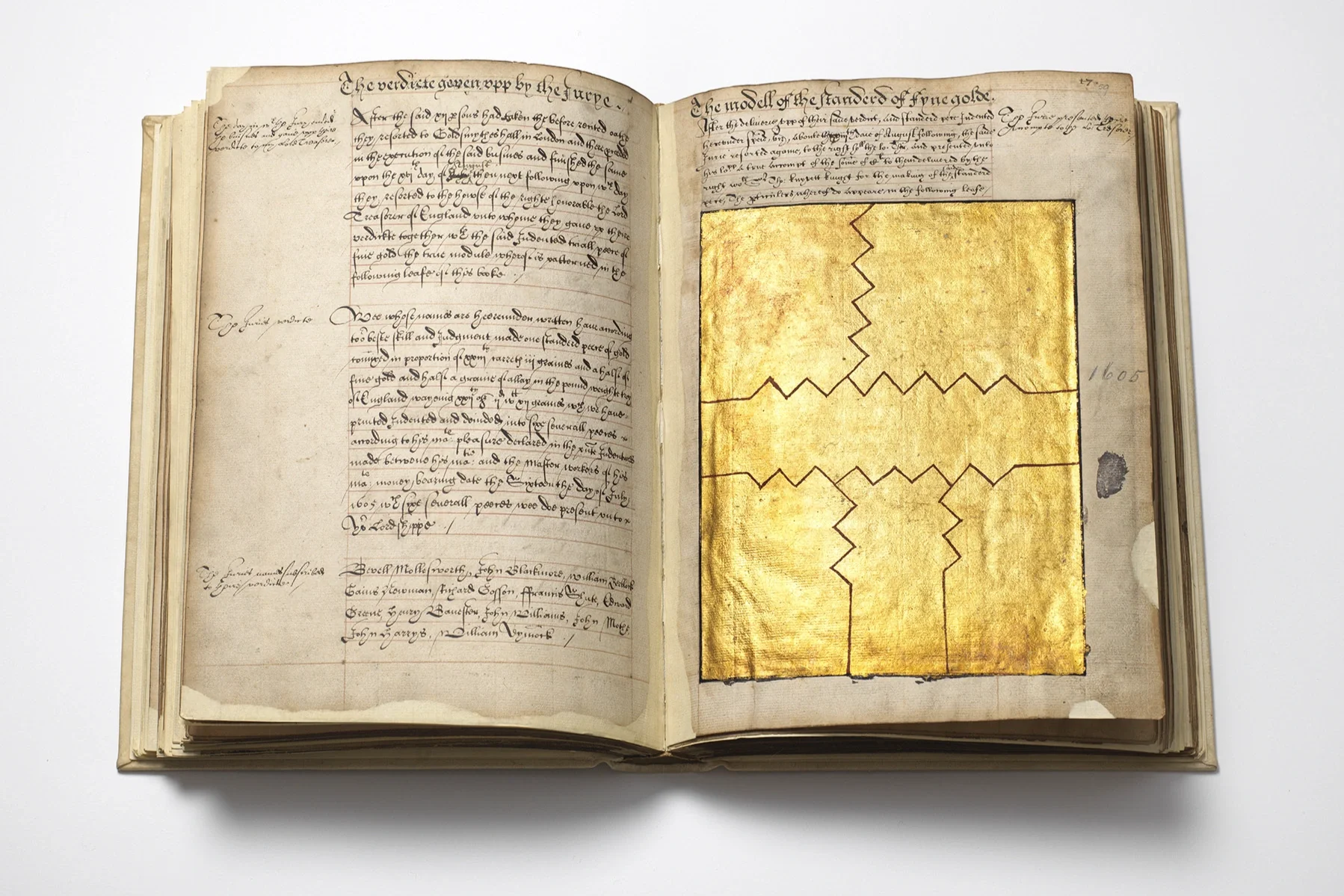
The Book of Record of the Trial of the Pyx, 1603-49, demonstrating how a trial plate was cut into interlocking portions - https://www.thegoldsmiths.co.uk/the-trial-of-the-pyx
The Guardians: Protection and Power
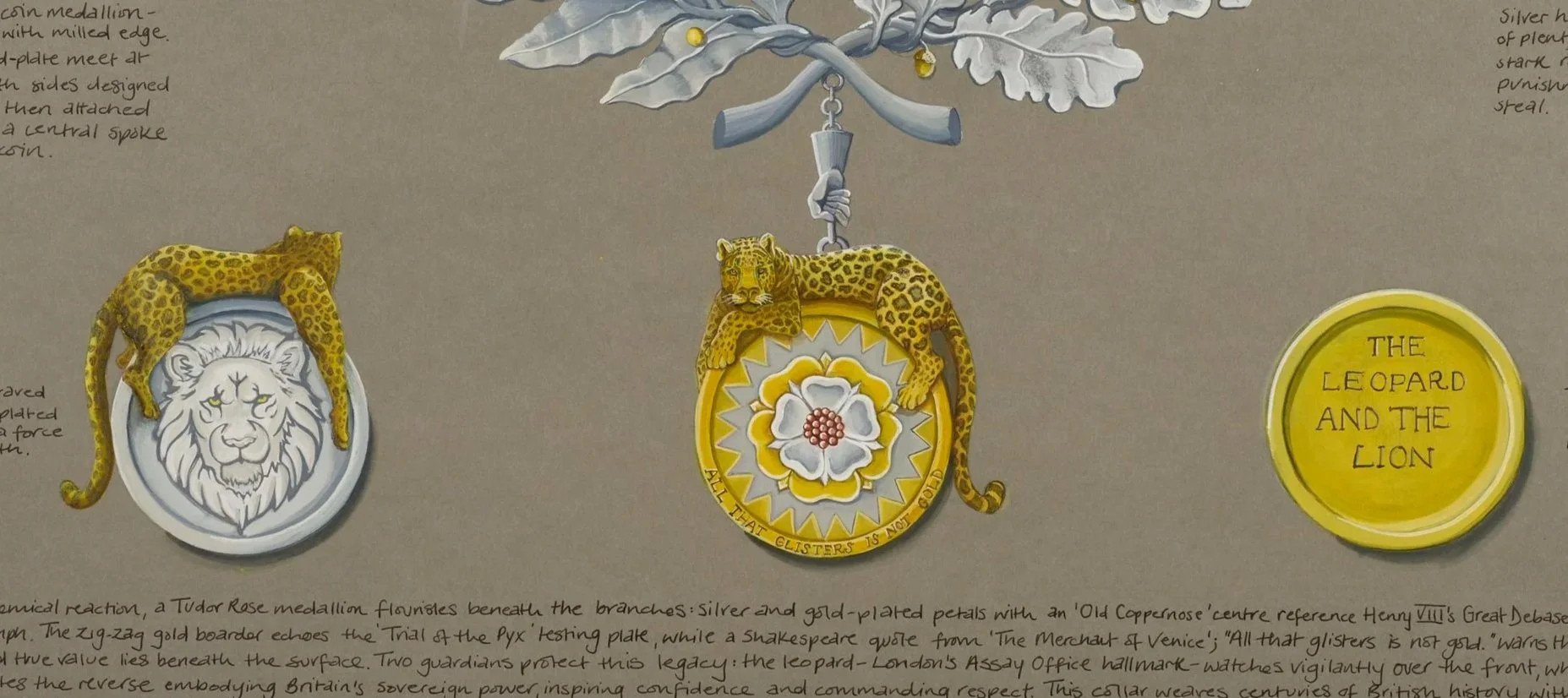
Katherine Elder’s hand painted, GCDC award winning regalia design for the Royal Mint. Detail: the medallion featuring its two guardians - the London Assay Office Leopard on the front and Great Britain’s ferocious Lion on the back.
The Heraldic Hand
The medallion hangs from a silver heraldic hand - a reference to the Hand of Plenty, symbolising abundance and prosperity. But there's a darker historical layer here. Those caught stealing from or debasing the mint in Tudor times faced brutal punishment. The loss of their hands... or worse.
The hand here is guardianship. But its history makes it also a warning.
The Leopard: London's Protector
Draped across the front of the medallion is a leopard, gold-plated with oxidised silver markings. It stares directly at whoever observes the Assay Master wearing this collar.
This is the hallmark of London's Assay Office - the ancient mark that guarantees the metal has been tested and is true. Guarding. Protecting. Powerful. Intelligent. Fiercely independent.
Its presence on this piece is a declaration: this is what we stand for. This is what we protect.
The Lion: Britain's Roar
Turn the medallion over and the reverse reveals the fierce head of a lion - strong, proud, ferocious.
The King of Beasts. The symbol of our King and the Crown. Great Britain itself. Pride, strength, dignity, courage, nobility.
A force to be reckoned with. One not to be messed with.
What This Piece Means
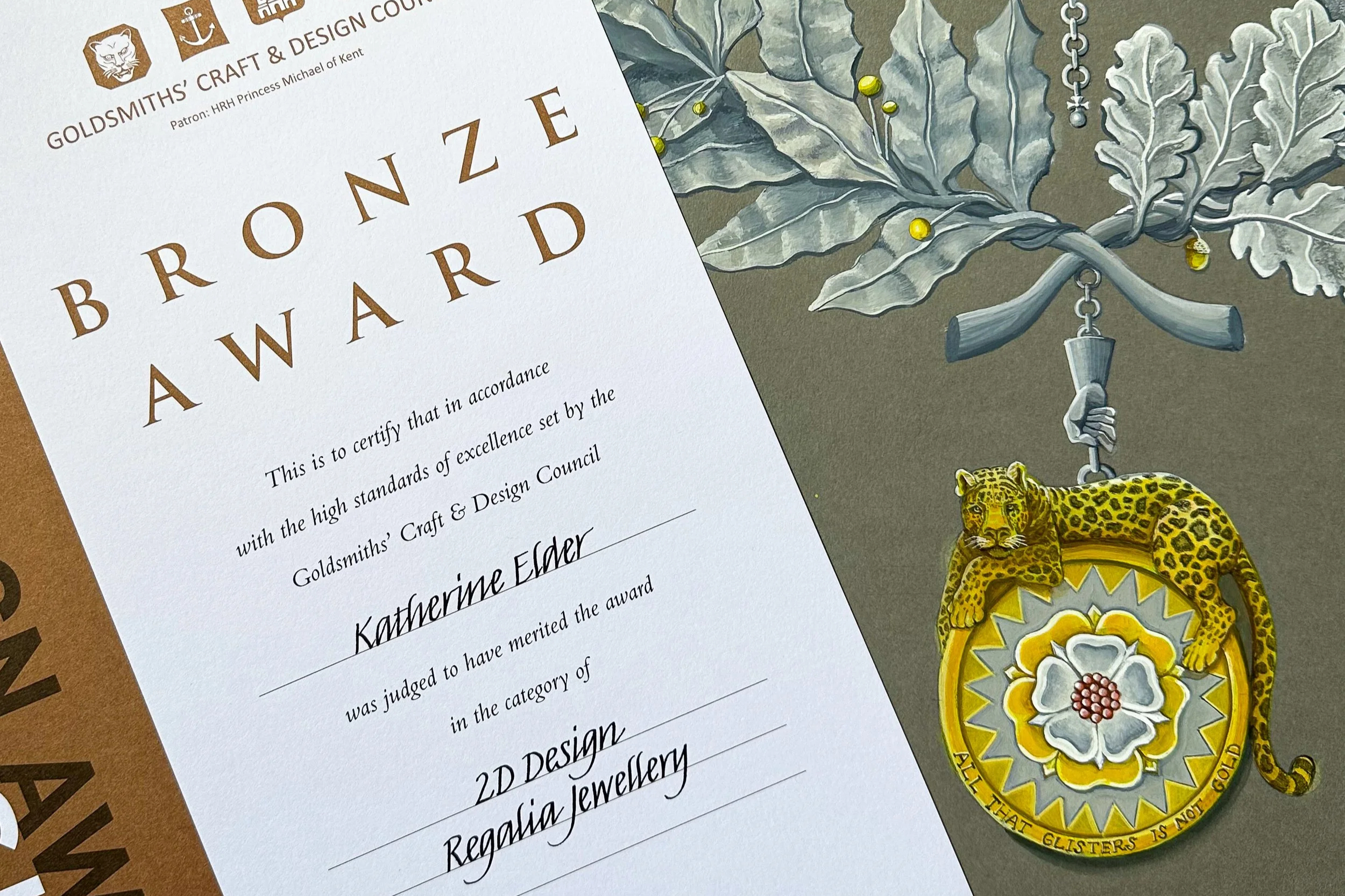
Katherine Elder’s Bronze award certificate from the Goldsmiths’ Craft and Design Council 2026 for her hand painted GCDC regalia design commissioned by the Royal Mint for the King’s Assay Master.
This ceremonial collar weaves together centuries of British history, monetary reform, craftsmanship symbolism, and contemporary relevance. Every element - from the carefully chosen botanical references to the dual-sided medallion - tells the story of the Master of the Assay's profound responsibility: maintaining the purity, integrity, and trustworthiness of the realm's currency. It is a piece designed to inspire confidence, command respect, and serve as a reminder that true value - whether in metal, character, or nation - must be tested, proven, and protected.
Winning Bronze at the GCDC Awards feels like validation that pieces that are woven with stories and symbolism matter and have precious value. That jewellery can carry centuries of meaning and that taking the time to understand the history and the hidden meanings is worth doing.
I'm so grateful to the Goldsmiths' Craft and Design Council for recognising it and to everyone who's followed this work.
Katherine Elder Fine Jewellery · From Brushstroke to Bench
www.katherineelder.com | @katherineelderjewellery